Welcome to the Kindness Exchange. If you’re here, you may have stopped by one of our pop-up kindness tables in the local community. Perhaps you wrote a kind note, took one that spoke to you or simply paused for a quiet moment.

The Kindness Exchange is a local Surrey community initiative that encourages people to pause, breathe and reconnect with simple acts of kindness both towards others and towards themselves. Sometimes a kind word, a thoughtful note or a brief moment of reflection can make all the difference to how we feel.

You might have seen us at local charity events, community fairs, farmers’ markets or town gatherings in Farnham and surrounding areas of Surrey. From local charity fundraisers to community days and events organised with the Farnham Town Council, we enjoy meeting people and supporting mental health and wellbeing in Surrey.

This article is an extension of our printed self-care pocket book with simple tools and thoughtful reminders to support your wellbeing. Here you will find practical ways to look after your mental health including:

  • Self-care suggestions
  • Practising kindness for yourself and others
  • Managing everyday stress and overwhelm
  • Breathing and grounding techniques

Looking after your wellbeing does not need to be complicated. Often it begins with small, steady habits such as taking a breath, writing a kind word, stepping outside for a moment of fresh air or reminding yourself that support is always available.

The Wheel of Self-Care: A Guide to Holistic Wellbeing

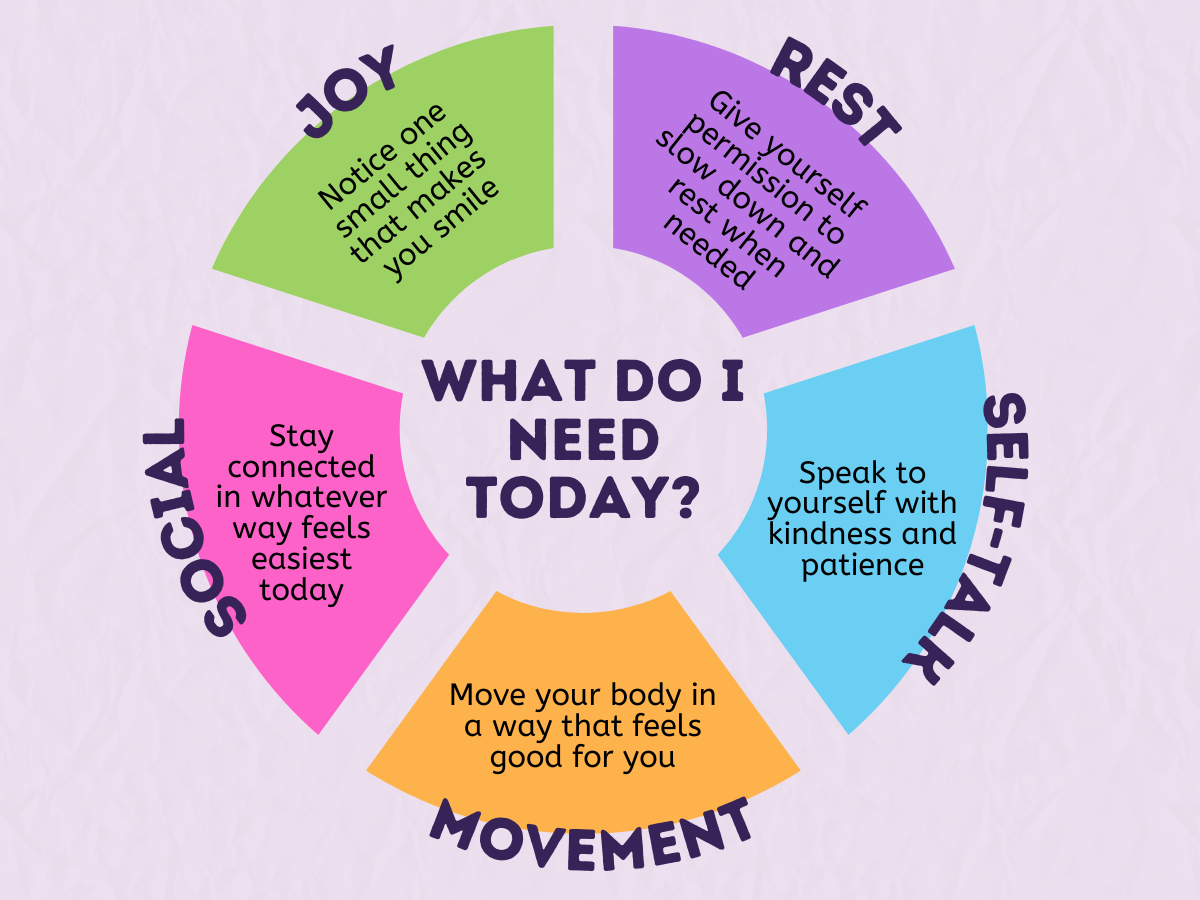
The Wheel of Self-Care is a helpful tool for maintaining balance in your life. It reminds us that self-care isn’t just one activity but is multi-dimensional. When one area of the wheel is neglected, it can affect your energy, mood and resilience.

1. Joy

Finding joy isn’t about grand gestures. Whether it’s listening to your favourite song, reading a book or laughing with a friend, finding small moments in your day that bring you joy can build positive emotions and strengthens your overall wellbeing.

2. Rest

Rest is essential for repairing your nervous system and preventing burnout. Quality sleep, relaxation techniques and short breaks throughout the day can significantly improve mood and concentration.

3. Self-Talk

The way we speak to ourselves shapes how we feel about ourself and others. Positive and compassionate self-talk can reduce anxiety and stress. Noticing negative patterns and gently reframing thoughts is a practical step towards feeling more confident and resilient.

4. Movement

Physical activity regulates stress hormones like cortisol, releases endorphins and boosts overall mental health. Whether it’s a daily walk, yoga or a structured workout, moving your body is an essential component of the self-care wheel. Even brief bursts of movement can uplift mood and energy.

5. Social Connection

Spending time with loved ones, engaging in community groups or even checking in with a colleague can enhance our mood, reduce stress and strengthen your support network.

How to Use the Wheel of Self-Care

You don’t need to focus on every area every day. Start by noticing where the wheel feels off-balance:

  • Reflect on which section needs the most attention.

  • Choose one small action (like a 10-minute walk, a short meditation or a phone call with a friend)

  • Track your feelings to notice improvements in wellbeing over time.

Even small, consistent adjustments can create a significant impact on your mental health, energy levels and overall happiness.

Illustration of a Wheel of Self-Care showing joy, rest, self-talk, movement, and social connection for mental wellbeing

The Self-Care Menu: Simplifying Your Wellbeing Routine

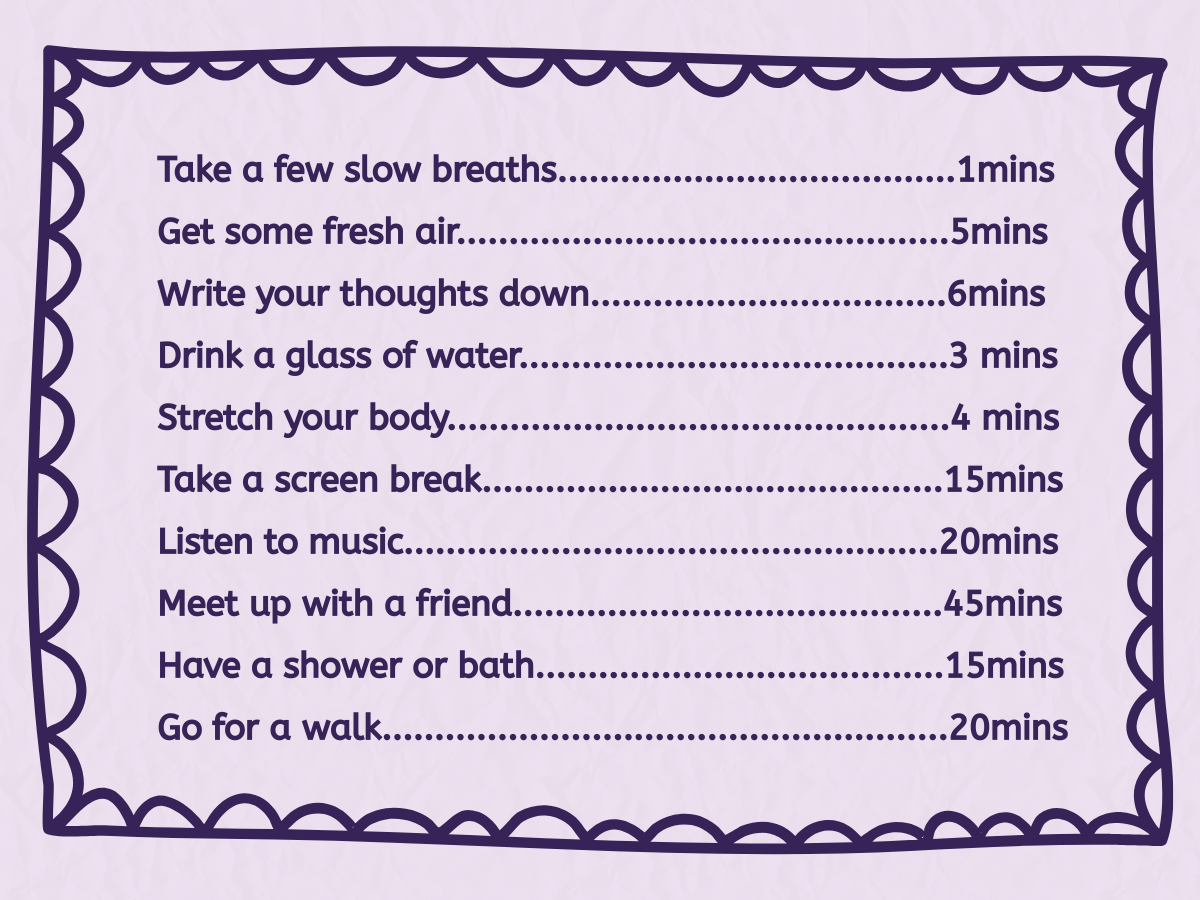
The Self-Care Menu can be used when you feel overwhelmed and need simple and accessible ways to alleviate stress and anxiety. It works because it removes the pressure of “I should do something big” and reduces decision fatigue when your energy is low and you aren’t sure where to start. Often, just deciding what to do can feel exhausting so this menu offers ready-to-use options to meet you where you are.

How the Menu Works

You can create your own self-care menu by categorising activities by time, so you can match your activity to your current capacity. For example:

  • 1 minute – Small actions like drinking water, deep breathing or stretching can calm your nervous system and restore focus.

  • 5 minutes – Quick activities like journaling, listening to music or a short screen break can shift your mood and reduce stress.

  • 20 minutes – Medium-length actions such as mindful movement, cooking a healthy snack or reading support both physical and mental wellbeing.

  • 45 minutes – Longer activities like meeting a friend, taking a relaxing bath or engaging in creative hobbies can support longer term wellbeing.

The great thing about the Self-Care Menu is that self-care doesn’t have to be expensive, aesthetic or perfect. What matters is that it feels supportive and restored.

How to Use the Self-Care Menu

  1. Check in with yourself: Notice your current energy, stress level or emotional state.

  2. Pick an option that fits your time and capacity: Even a 1-minute action can make a difference.

  3. Notice the effect: Track how your chosen action impacts your mental health and wellbeing over the day.

Self-Care Menu with simple activities and recommended times for supporting mental health and wellbeing

Box Breathing Technique: A Simple Tool for Calm and Focus

The Box Breathing Technique is a widely used breathing exercise that supports mental health, reduces stress and helps regulate the nervous system. It’s simple to learn, can be done anywhere and is an effective practice for moments when you feel overwhelmed, anxious or mentally overloaded.

How Box Breathing Works

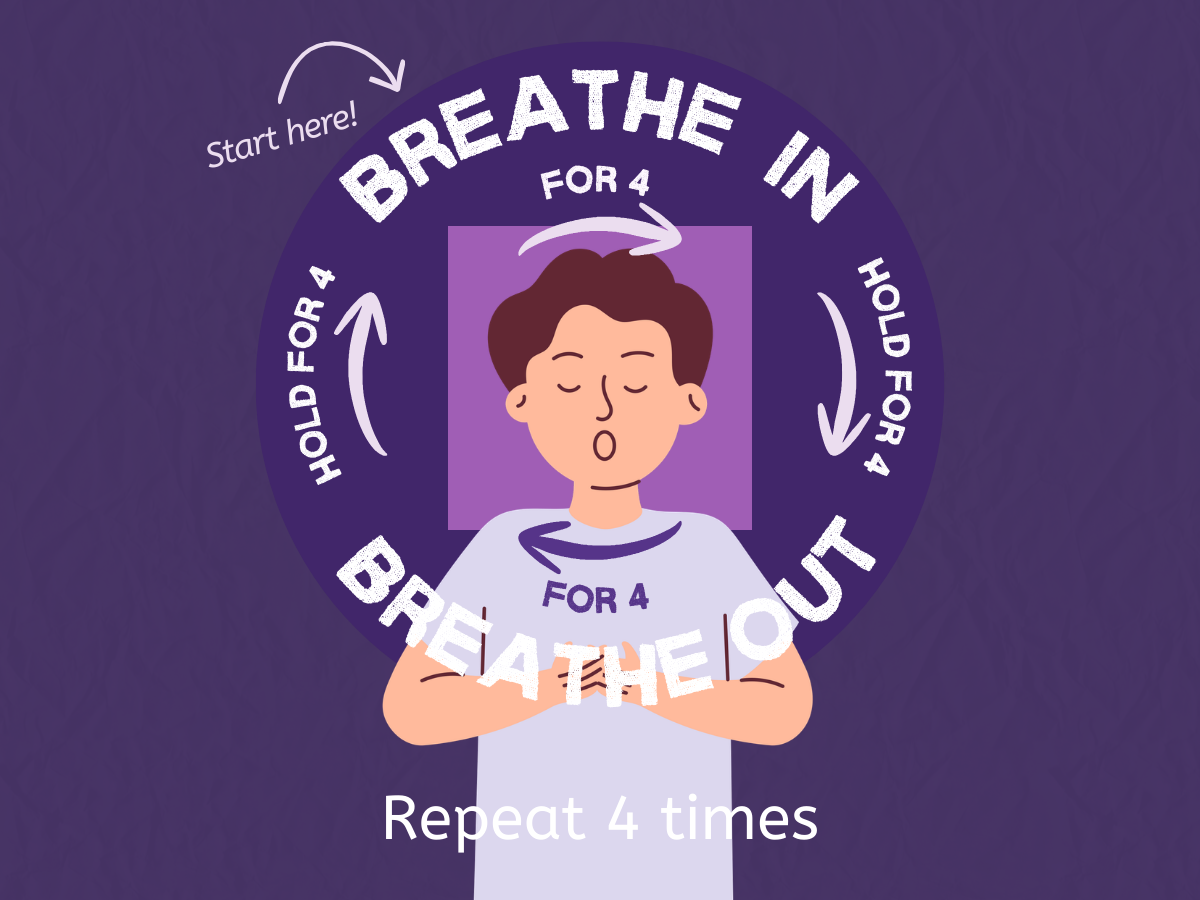
Box breathing follows a steady rhythm:

  • Breathe in for 4 seconds

  • Hold your breath for 4 seconds

  • Breathe out for 4 seconds

  • Hold for 4 seconds

Repeat this cycle four times or for as long as you need. This steady, square rhythm is why it’s often called “box” breathing as each step represents one side of the box. It can be helpful to imagine this or draw it out when you first start.

Benefits of Box Breathing

When we feel stressed, anxious or overwhelmed, our breathing can naturally become fast and shallow. This sends signals to the brain that something is wrong, activating the body’s stress response.

Slow, controlled breathing does the opposite. It activates the parasympathetic nervous system, the part of the body responsible for rest, calm and recovery. Practising breathing exercises like box breathing can help bring the body back into balance.

When to Use Box Breathing

The Box Breathing Technique can be used anytime you need to reset your mind and body. Many people find it especially helpful for the following:

  • When anxiety or panic begins to rise
  • Before sleep to help the body wind down

  • During a busy or stressful workday

  • Before responding to a difficult message or conversation
  • Anytime you need a moment of calm and clarity

Graphic of a person practicing box breathing with steps to inhale, hold, exhale, and hold for four counts

Self-Care for How You’re Feeling in the Moment

Emotions are signals that can give us information about our needs, boundaries and experiences. Feelings such as stress, sadness, anger or anxiety often arise to draw attention to something important. It may indicate that we need need for rest, connection, reassurance or change.

Rather than trying to ignore or immediately “fix” a feeling, it can be helpful to pause and become curious about what the emotion might be telling you. Responding with the right kind of self-care whether that’s rest, movement, talking to someone you trust or taking a moment to breathe, can make a big difference in how you feel.

Listening to these signals can help you build greater emotional awareness, resilience and overall wellbeing over time.

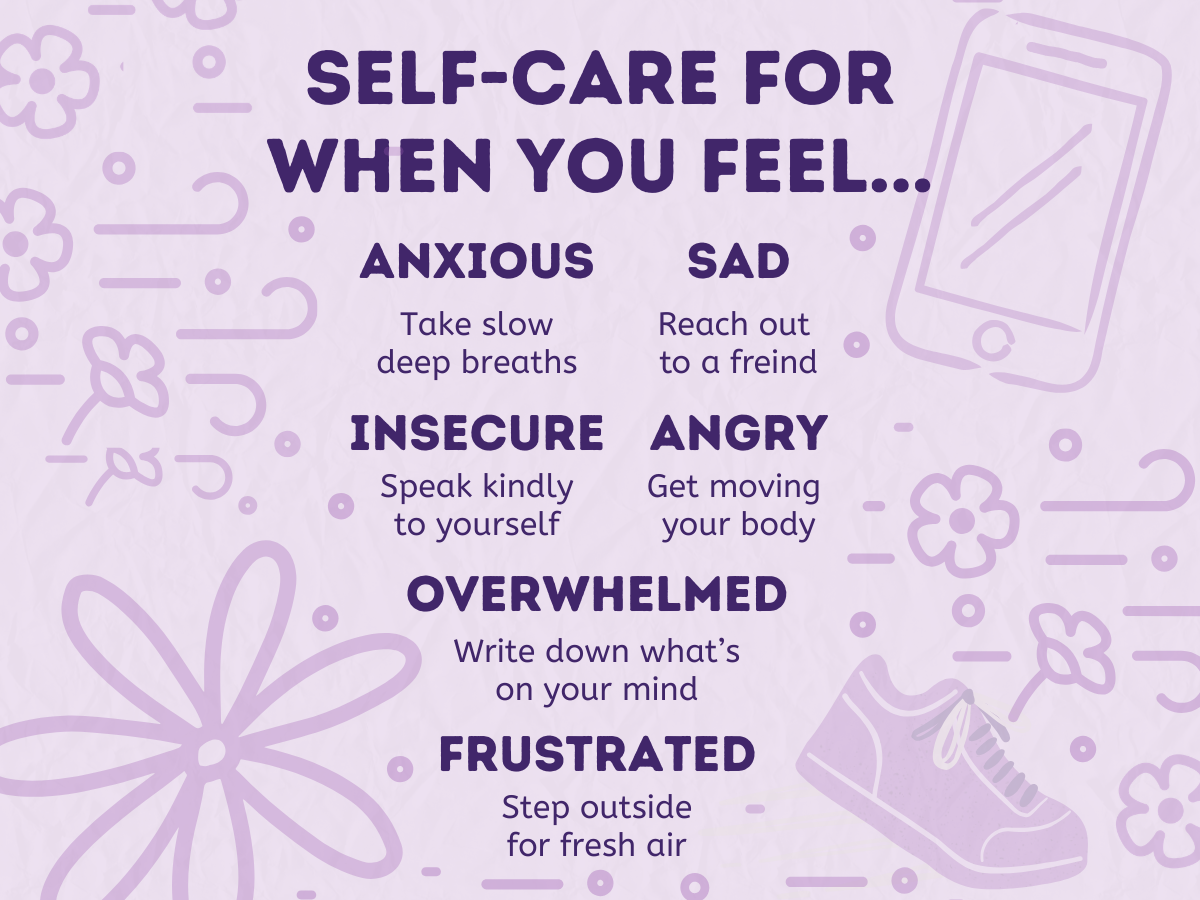
Sad → Reach out to a friend

Sadness often makes us withdraw from others but interaction with someone you love releases oxytocin, a hormone that supports comfort and connection.

Anxious → Take slow deep breaths

Breathing brings you back to your body and the present moment, calming the stress response. You could use box breathing as a technique as shared above.

Insecure → Speak kindly to yourself

Gentle self-talk can interrupt cycles of overthinking and feelings of insecurity which builds confidence overtime.

Angry → Get your body moving

Movement can help release energy which is built up in the body through anger in a safe way, reducing the intensity of the emotion.

Overwhelmed → Write down what’s on your mind

When everything feels tangled, putting thoughts on paper can create clarity.

Frustrated → Step outside for fresh air

A physical shift in environment often helps create a mental shift. Fresh air and natural light helps to regulate mood and reduce stress hormones.

The goal isn’t to eliminate feelings, it’s to support yourself through them.

Self-care guide for different emotions including sadness, anxiety, insecurity, anger, overwhelm, and frustration

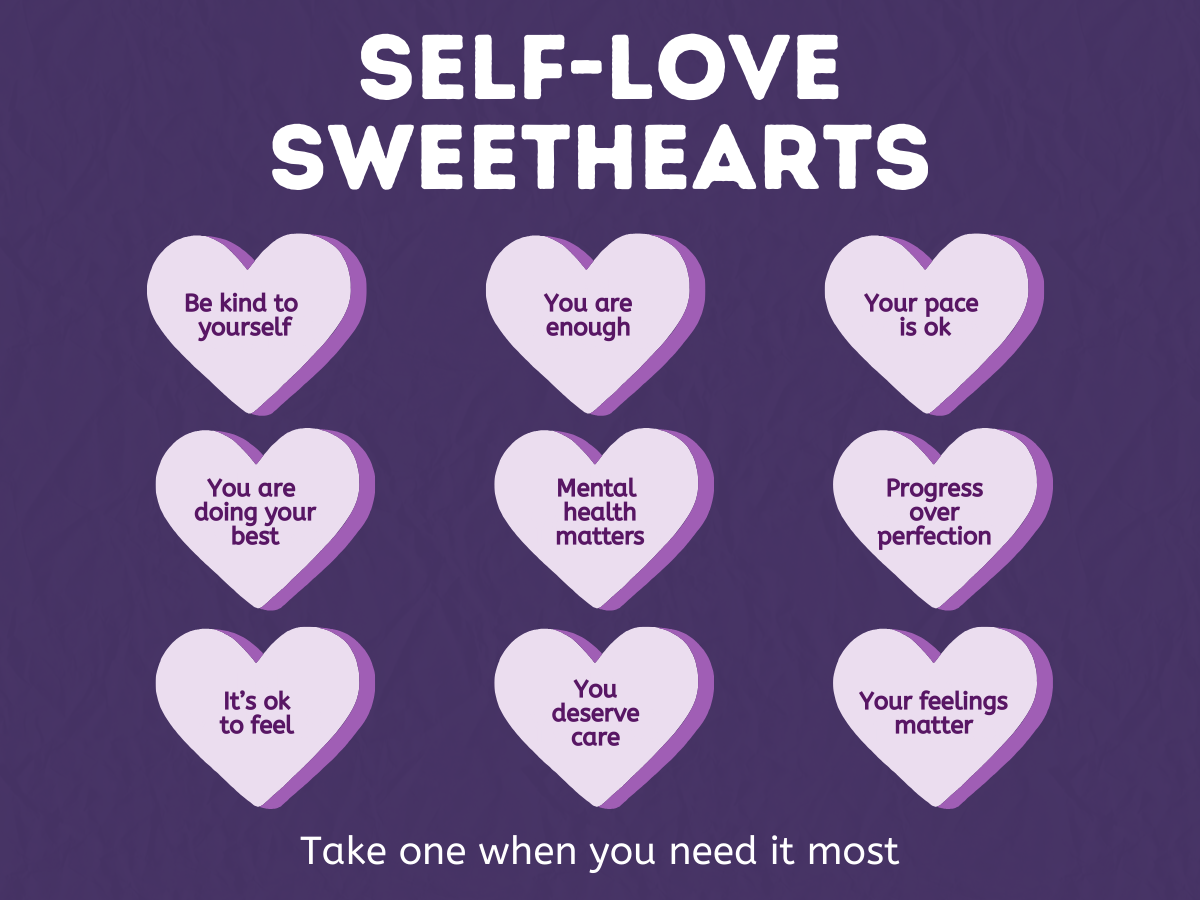
Self-Love Sweethearts

The phrases on this card may look simple, but repetition can shape our self-belief and confidence. Many individuals struggle with self-criticism, while self-compassion is a skill that often needs to be learned and practised.

When you remind yourself:

  • You are enough

  • Progress over perfection

  • It’s okay to feel

Over time, these small reminders help replace harsh self-judgement with a more balanced and supportive inner voice. Practising self-compassion can increase resilience, reduce symptoms of anxiety and depression and encourage healthier motivation. People tend to grow and change more sustainably when they are guided by understanding rather than criticism.

Notice how you speak to yourself throughout the day. If your inner voice becomes critical, gently replace it with one of the sweetheart phrases.

Purple background with light purple heart icons showing self-love messages like “You are enough” and “Be kind to yourself”

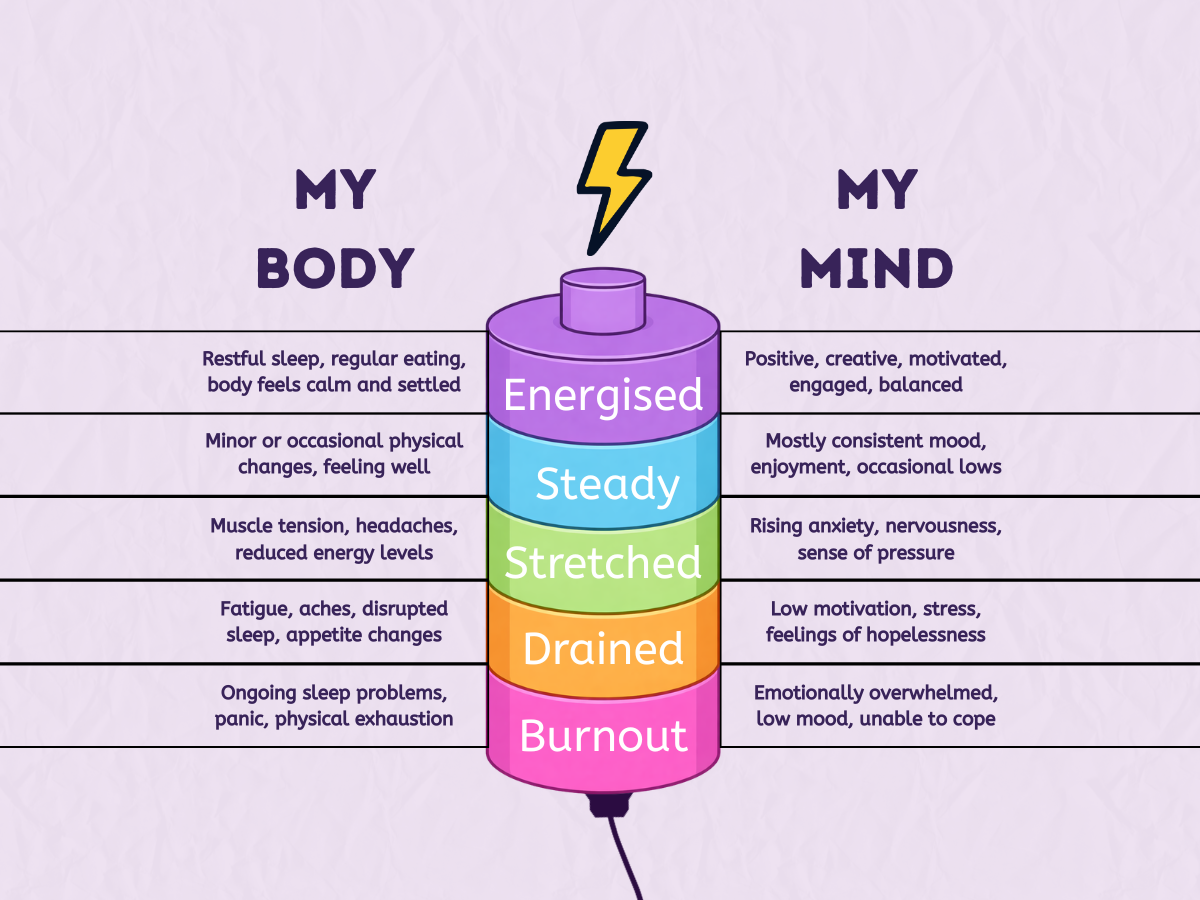
Check In: How Is Your Battery Today?

The battery check-in is a simple way to build self-awareness around how you’re feeling mentally, emotionally and physically. It isn’t about productivity or how much you’ve achieved. Instead, it helps you pause and notice your current level of energy and wellbeing.

Many people only recognise their needs when they reach exhaustion or burnout. Regularly checking in with your “battery level” can help with earlier awareness, giving you the opportunity to respond before stress builds too far.

Noticing Your Energy Level

Your battery may shift throughout the day or week. The goal is simply to notice where you are right now.

Energised
Your body and mind feel aligned. You may notice clarity, motivation and emotional openness. Creativity, focus and connection with others often come more easily at this level.

Steady
Things feel generally balanced. You may experience small fluctuations in mood or energy, but they feel manageable.

Stretched
You might begin to notice tension in your body or pressure in your thoughts. Energy feels thinner and stress may be building. This is a helpful moment to pause and introduce supportive actions such as rest, setting boundaries or asking for support.

Drained
Both physical and emotional reserves are low. Concentration may feel difficult and motivation reduced. At this stage, your system benefits from intentional rest and recovery, rather than self-criticism.

Burnout
Your body and mind feel overwhelmed. Emotional exhaustion, detachment or persistent fatigue may appear. When you reach this level, deeper rest and sometimes professional support can be beneficial.

A Moment of Self-Check

The value of this tool is self-awareness without judgement. Your battery level isn’t a measure of success or failure. It’s simply information about what your mind and body might need.

Try asking yourself:

“If this is my battery level today, what kind of support would help me most right now?”

Even small adjustments (rest, movement, connection or quiet time) can help recharge your energy and support your mental wellbeing.


Battery chart showing energy levels from Energised to Burnout with body and mind indicators for physical and mental wellbeing

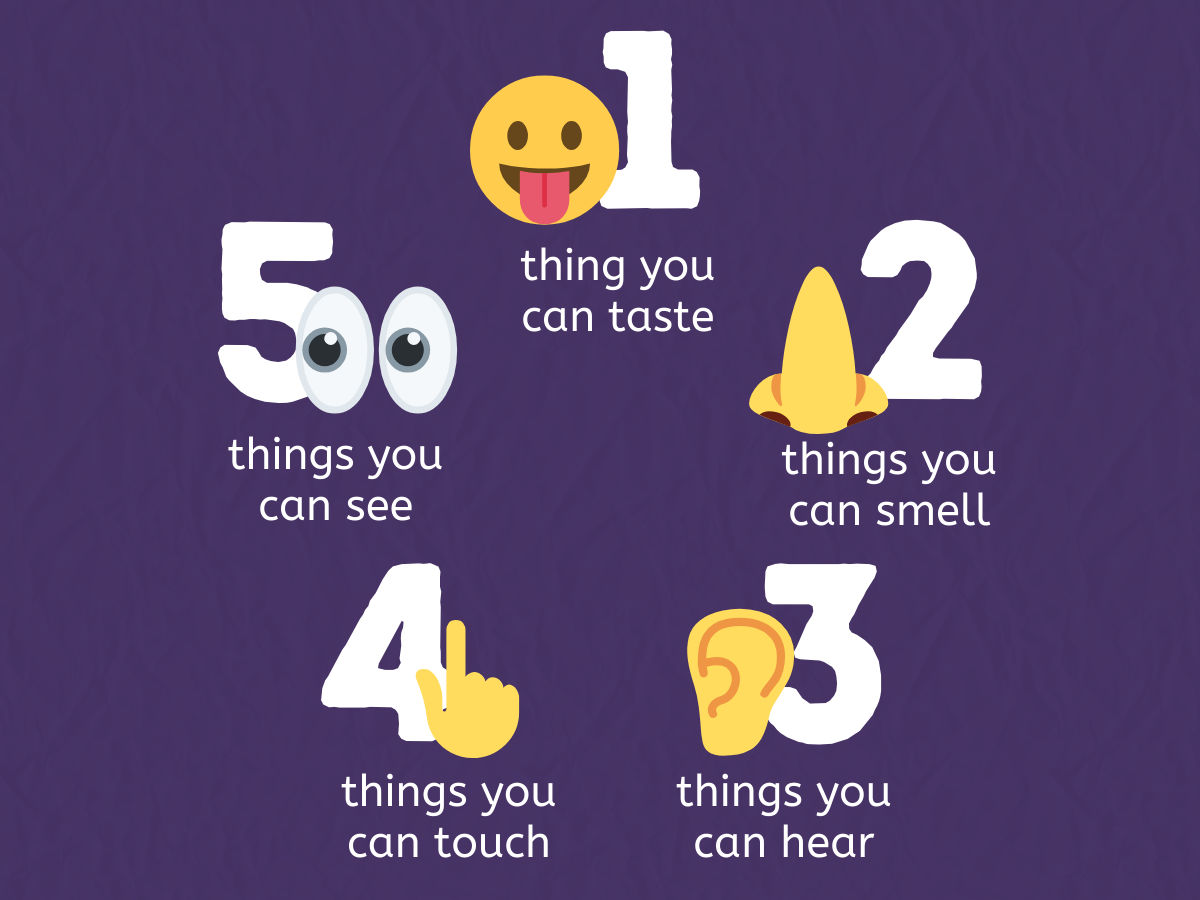
The 54321 Grounding Technique

Grounding exercises are powerful tools for managing stress and anxiety because they redirect attention away from overwhelming thoughts and back into the present moment. By using your senses you can anchor yourself in reality and create a sense of calm and control.

How to the 54321 Senses Technique

This simple method engages all five senses:

  1. See: Name 5 things you can see around you.

  2. Touch: Notice 4 things you can physically feel.

  3. Hear: Identify 3 sounds you can hear.

  4. Smell: Recognise 2 things you can smell in your environment.

  5. Taste: Focus on 1 taste, even if it’s just the memory of a flavour.

Take your time with each sense. The goal is mindful observation, allowing your brain to shift from rumination to present-moment awareness.

Benefits of this Grounding Technique

Using this grounding technique regularly can:

  • Reduce panic symptoms

  • Interrupt spiralling thoughts

  • Improve emotional regulation

  • Strengthen mindfulness and presence

How can this help me?

The 54321 grounding technique is especially helpful during:

  • Panic attacks or acute anxiety

  • Stressful social situations

  • Moments of overwhelm

  • Night-time anxiety or racing thoughts

Grounding technique illustration using emojis for the 5-4-3-2-1 sensory exercise to support mindfulness and stress relief

This collection of tools is here to remind you that self-care and kindness begin with awareness and small, intentional actions. Feeling better can start small with one breath, one check-in and one kind word to yourself. You deserve care, support and understanding and help is always available if you need it.

Please feel free to return to this guide as a reference as a self-care toolkit and send to others who might need it.

Find Support

The Eaves Counselling and Psychology


If you’re finding things persistently difficult, feeling overwhelmed, or noticing that your mood or anxiety is impacting daily life, it may be helpful to speak with a qualified professional. Self-care tools are valuable, but sometimes additional support is the most effective next step. If you would like to explore this, you can find information about our therapists, their areas of expertise and how to get in touch here: Practitioners Counselling and Psychology | The Eaves.

Reaching out for support is a practical and proactive way to look after your mental health.